Stop Forgetting to Follow Up With Customers: One Simple Habit That Can Transform Your Business
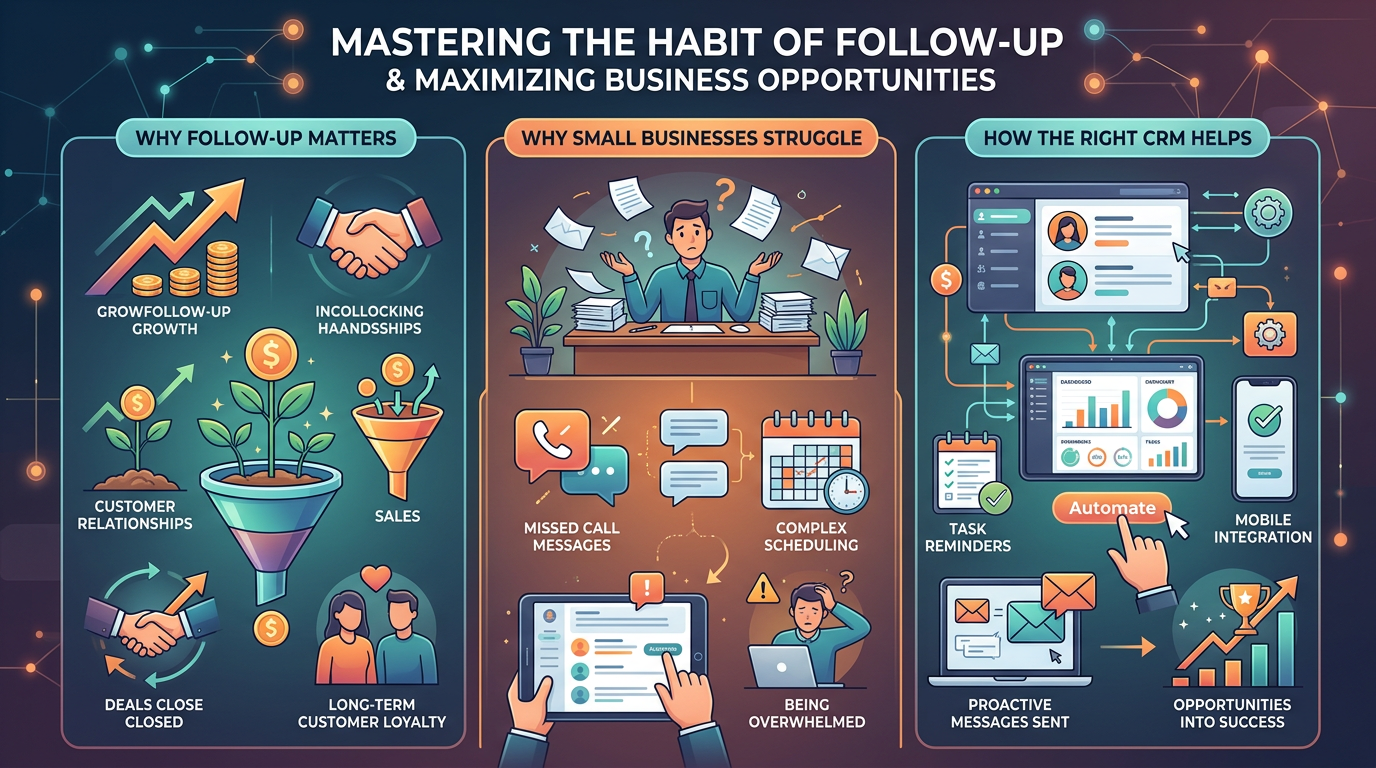
If there's one business lesson I wish I had learned earlier, it's this:
Most sales aren't lost because of price. They're lost because someone forgot to follow up.
That may sound harsh, but after owning multiple businesses for many years, I've seen it happen over and over again.
I've done it myself.
Not intentionally.
Not because I didn't care.
Life simply got busy.
If you're a small business owner, you probably know exactly what I'm talking about.
Your phone rings while you're helping another customer.
An email comes in while you're driving.
Someone requests an estimate just before closing time.
A customer says, "Call me next week."
You tell yourself...
"I'll remember."
Then tomorrow comes.
Then another customer calls.
Then another job starts.
Before you know it, two weeks have passed.
The customer hired someone else.
And you didn't even realize they were waiting on you.
The Lie We Tell Ourselves
For years I believed I had a pretty good memory.
I thought I could keep track of everything.
Customer names.
Phone numbers.
Appointments.
Follow-up calls.
Estimates.
Tasks.
Then my businesses started growing.
Suddenly my memory wasn't enough.
Not because I was getting older.
Because I had simply reached the point where my brain wasn't designed to manage that much information.
That's when I learned a valuable lesson.
Successful businesses don't rely on memory.
They rely on systems.
Every Customer Wants to Feel Important
Think about the last time you contacted a business.
You probably weren't just looking for information.
You wanted someone to acknowledge you.
You wanted someone to answer your questions.
You wanted someone to care.
Customers don't expect perfection.
But they do expect communication.
A simple phone call.
A quick email.
A text message.
Even a short update saying...
"I haven't forgotten about you. I'll have your estimate ready tomorrow."
Those little moments build trust.
Trust is what turns prospects into customers.
Following Up Isn't Being Pushy
This is something I had to learn.
For a long time, I worried that following up too much would annoy people.
Then I started paying attention to my own buying habits.
If I requested an estimate and never heard back...
I assumed the business wasn't interested.
If someone checked in a week later...
I appreciated it.
Why?
Because life gets busy for customers too.
They forget.
They get distracted.
They mean to call you back.
They simply don't.
Following up isn't pressure.
It's service.
My Seven-Year Frustration
For seven years I used a CRM that helped me keep my businesses organized.
It certainly improved things compared to sticky notes and spreadsheets.
But there were still moments when I found myself working around the software instead of letting the software work for me.
The more businesses I owned...
The more customers I served...
The more obvious those frustrations became.
Eventually I realized something.
The CRM should be reminding me.
It should be helping me.
It should make following up almost automatic.
Instead, I was still spending too much time trying to remember who needed what.
That wasn't good enough.
Why Most Businesses Miss Follow-Ups
I've talked with a lot of business owners over the years.
Very few intentionally ignore customers.
Instead, the same things happen again and again.
They're out on a job.
Their phone dies.
They forget to write something down.
Someone else answers the phone but never passes along the message.
An estimate gets buried in email.
A sticky note falls behind the desk.
The customer never hears back.
None of those business owners wanted to lose a sale.
They simply didn't have a reliable system.
The Cost Is Bigger Than You Think
Let's imagine your average customer spends $1,500.
Now imagine forgetting to follow up with only two qualified prospects every month.
That's $3,000.
Every month.
Over a year...
That's $36,000.
And that's assuming they only buy once.
What if they become repeat customers?
What if they refer friends?
Suddenly one missed follow-up isn't just one lost sale.
It's years of lost business.
The Habit That Changed Everything
One habit completely changed the way I ran my businesses.
I stopped asking myself...
"Will I remember?"
Instead I asked...
"Where is this written down?"
If it wasn't in my system...
It didn't exist.
That simple mindset shift reduced stress more than almost anything else I've done in business.
A Great CRM Becomes Your Second Brain
One of the ways I describe a CRM is this:
It's your second brain.
It remembers everything you don't have to.
Who called.
Who emailed.
Who needs an estimate.
Who requested a callback.
Who hasn't responded yet.
Who became a customer.
Who still needs attention.
Instead of carrying all of that in your head, the system carries it for you.
That frees you to focus on serving people instead of trying to remember details.
Why I Built Best Local Lead CRM
People often ask me what inspired me to build my own CRM.
The answer is simple.
Frustration.
Not because CRMs aren't useful.
They absolutely are.
I used one every day for seven years.
But after years of paying monthly subscriptions and running into limitations that slowed me down, I finally reached a point where I knew there had to be a better way.
I wanted reminders that made sense.
Workflows that were easy to use.
Tasks that actually helped me stay organized.
A CRM shouldn't make business more complicated.
It should quietly help you stay on top of everything.
That's exactly what I set out to build.
Consistency Builds Reputation
Here's something I've noticed.
Customers rarely say...
"They had the fanciest software."
Instead they say things like...
"They always called me back."
"They kept me informed."
"They were easy to work with."
"They did exactly what they promised."
Those aren't software features.
They're habits.
A good CRM simply makes those habits easier to maintain.
Don't Depend on Good Intentions
Most business owners have good intentions.
They genuinely want to call customers back.
They genuinely want to provide great service.
But good intentions aren't a business strategy.
Systems are.
When your business depends on remembering everything, eventually something will be forgotten.
When your business depends on reliable systems, consistency becomes much easier.
That's where growth begins.
My Final Thoughts
If I could give one piece of advice to every small business owner, it would be this:
Never make your memory responsible for your customer relationships.
Write it down.
Schedule it.
Track it.
Set reminders.
Create systems.
Your future customers—and your future self—will thank you.
That's one of the biggest lessons I learned after seven years of relying on CRM software.
And it's one of the biggest reasons I built Best Local Lead CRM.
I wanted a CRM that helped me remember what mattered most.
Not because I have a bad memory.
Because I have a growing business.
And growing businesses deserve systems that grow with them.
Ready to Never Miss Another Follow-Up?
Imagine starting every day knowing exactly who needs your attention, what tasks are waiting, and which opportunities are ready to move forward.
That's the peace of mind a well-designed CRM can provide.
Best Local Lead CRM was created by a fellow business owner to help you stay organized, follow up consistently, and build stronger customer relationships—without unnecessary complexity or unnecessary costs.
Because every customer deserves to know they matter.